
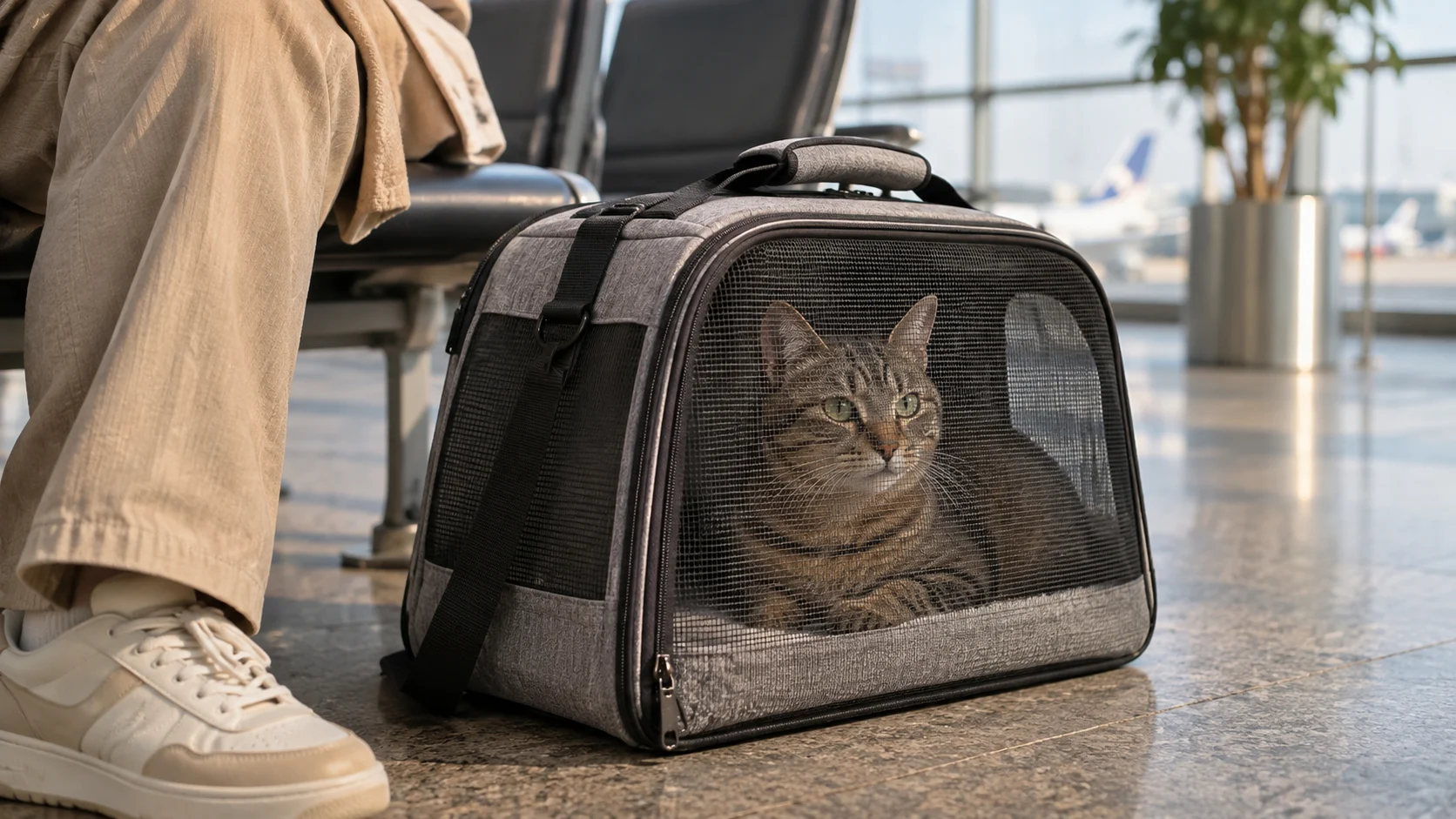
Planning a winter trip with a cat or dog starts with more than finding your own seat. Check whether your pet can travel on the route, where it will be carried and whether the documents can be ready in time. An available passenger seat does not mean there is space for an animal. Resolve these questions before paying wherever possible.
1. Arrange approval before committing
Tell the airline your pet’s species, breed, age, total weight with its carrier and the carrier’s external dimensions. Ask about acceptance on the specific flight. AZAL’s pet carriage rules require an advance request and approval in the booking. A submitted request is not the same as confirmed carriage.
If a passenger reservation is needed first, ask the seller how the reservation, pet approval and payment should be sequenced. Clarify what happens to your ticket if approval is unavailable. Check the pet fee, the flights it covers and the service’s change conditions separately. Keep the answers with your booking records.
2. Distinguish cabin and hold requirements
A small animal is not automatically eligible for cabin travel. Weigh your pet inside its carrier. AZAL publishes a cabin limit of 8 kg combined and carrier dimensions of 40 × 30 × 20 cm. Turkish Airlines’ conditions specify 8 kg combined, with maximum carrier dimensions of 23 cm high, 30 cm wide and 40 cm long.
These are airline-specific examples, not a universal allowance. Hold travel needs a separate check of the container, breed restrictions and acceptance arrangements. Do not assume an animal that cannot travel in the cabin will automatically be accepted in the hold. For a winter itinerary, ask whether weather-related restrictions could affect carriage.
3. Choose a suitable carrier
A shop’s “airline approved” label is not enough. Give the airline the carrier’s external measurements, material and closure details. Allow enough space for the animal to stand normally, turn and lie down. Check requirements for ventilation, absorbent lining and water containers.
Prepare the carrier ahead of time rather than buying it the evening before departure. Add your contact information and keep the documents accessible. Discuss fitness to fly with a veterinarian. Do not choose medication or sedatives based on travel tips; this guide concerns transport arrangements rather than treatment.
4. Check official entry documents
Airline approval does not establish permission to enter a country with an animal. Consult the destination’s official veterinary authority for the document list, issuing procedure and validity periods. For example, European Commission guidance on bringing pets into the EU covers identification, rabies vaccination, certification and additional requirements depending on the circumstances.
Do not treat that overview as a complete document pack for every country. The departure country, the animal’s travel history and the route may matter. Start early: tests and paperwork may not be achievable in the final week. Check Azerbaijan’s current requirements separately for the return journey.
5. Check every connection
- Which airline actually operates each flight, and is pet carriage confirmed on every sector?
- Must you collect the animal, check it in again or cross a border during transit?
- Do entry and transit documents cover the actual travel dates?
- When should you arrive, and where must you present your pet?
- Will a flight change require a fresh pet approval?
Before departure, compare the itinerary, carriage confirmation and documents once more. If your passenger ticket is reissued, separately confirm that your cat or dog is accepted on the replacement flight. Do not assume the pet arrangement transferred automatically.
Sources checked on 6 November 2026. Recheck the rules before travel.